
Who Pays For A Fence Between Neighbors In California
We connect you with independent Glendale fence contractors.
Almost every argument about a fence between two houses comes down to one question, and California already answered it. The answer surprises most people on both sides. If a fence divides your property from your neighbor's, the law starts from the position that you both pay for it.
The Default Is A Fifty Fifty Split
The rule is Civil Code 841, rewritten in 2013 and often called the Good Neighbor Fence Act. It says adjoining landowners are presumed to share an equal benefit from any fence dividing their properties, and, unless they have agreed otherwise in a written agreement, are presumed to be equally responsible for the reasonable costs of building it, maintaining it, or replacing it when it needs replacing.
Two words in there do a lot of work. Presumed means this is the starting point, not the final answer, and it can be argued against. Reasonable means your neighbor is not on the hook for whatever you feel like building.
The same section also says both owners share equally in the responsibility for maintaining the boundaries and monuments between them, which means the survey markers rather than the fence itself.
You Have To Give Thirty Days Notice First
This is the part almost nobody knows about, and it is the part that decides arguments. If you intend to spend money on a shared fence, the law says you must give thirty days prior written notice to each affected neighbor before you do.
It also says what that notice has to contain, and it is a good deal more than a text message saying the fence is falling down:
- Notice that the law presumes equal responsibility for the reasonable costs
- A description of the nature of the problem facing the shared fence
- The proposed solution for addressing the problem
- The estimated construction or maintenance costs involved
- The proposed cost sharing approach
- The proposed timeline for getting the problem addressed
Put plainly, you cannot build first and invoice later and expect the law to back you up. The notice is what turns your neighbor into someone who was given a fair chance to weigh in.
The Split Can Be Argued Down
The fifty fifty presumption can be beaten. Section 841 says it may be overcome by a preponderance of the evidence showing that equal responsibility would be unjust, and it lists what a court weighs in deciding that:
- Whether the financial burden on one owner is substantially disproportionate to the benefit that owner gets from the fence
- Whether the cost of the fence would exceed the difference in the value of the property before and after it goes in
- Whether the burden would be an undue financial hardship for one owner, shown by reasonable proof
- Whether the project is reasonable, including whether the costs look unnecessary or excessive, and whether they come from one owner's personal aesthetic or architectural preferences
- Any other equitable factors that fit the circumstances
That fourth item is worth reading twice. If you want a fence in a material that costs three times what the job needs because you prefer how it looks, the law has already anticipated you, and your neighbor is not obliged to fund your taste.
If the presumption is beaten, a court can order a contribution of less than half, or no contribution at all.
Who Counts As A Landowner
The section defines a landowner as a private person or entity holding a possessory interest in the property. It specifically excludes a city, a county, a district, a public corporation or any other public agency. So if your fence backs onto public land, this is not the rule that governs it.
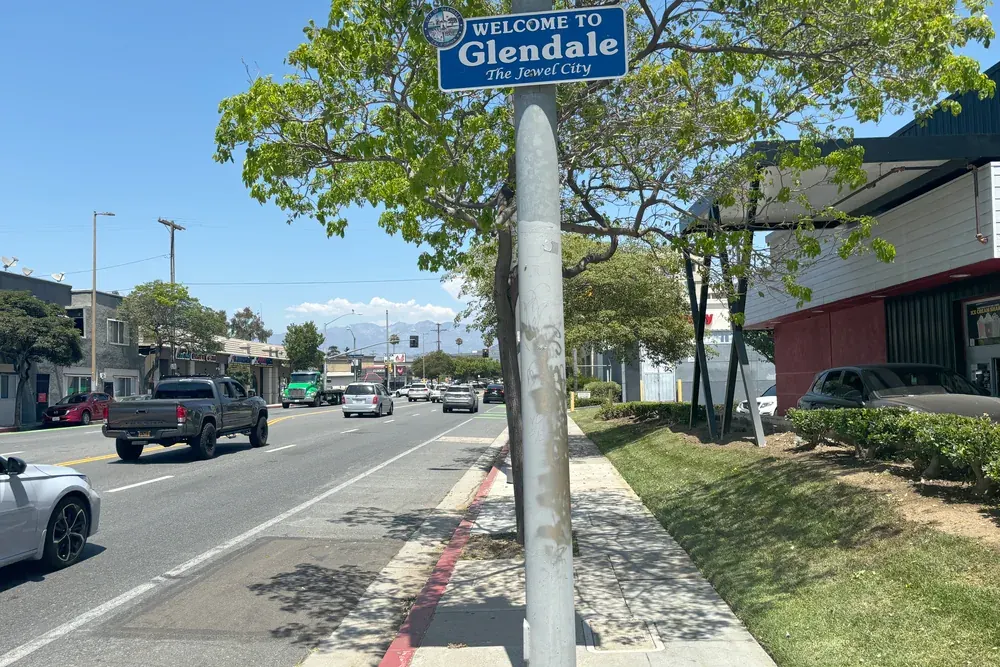
What This Looks Like In Glendale
Nothing in Civil Code 841 overrides the city. A shared fence still has to meet Glendale's height and material rules, still comes under the front setback rule if it is out front, and still needs a building permit above seven feet. Agreeing to split the cost with a neighbor does not make an eight foot fence legal.
On a hillside lot there is a second wrinkle. If the shared fence sits on or near a retaining wall, the cost conversation and the engineering conversation are different conversations, and the second one usually decides the first.
The Practical Version
If your shared fence is failing and you want it replaced, put it in writing thirty days ahead. Say what is wrong, say what you propose, say what you think it costs and how you want to split it, and give a timeline. That is not a legal maneuver, it is just the thing the law asks for, and it also happens to be the version most likely to end with a neighbor who still talks to you afterwards.
Civil Code 841 is summarised here from the current text on the California Legislative Information site, read on August 29, 2026. This is a plain English summary and not legal advice. We are a referral service, not a law firm. If you are in an actual dispute with a neighbor about money, talk to a lawyer about your own situation.



Get A Free Fence Estimate
One call and a few questions about your yard, then a local contractor comes out and measures. Tell him if your land slopes or if you live up in the foothills, because both of those change the price. The estimate is free and there is nothing to sign.
Call Now(747) 307-5501We connect you with independent Glendale fence contractors.